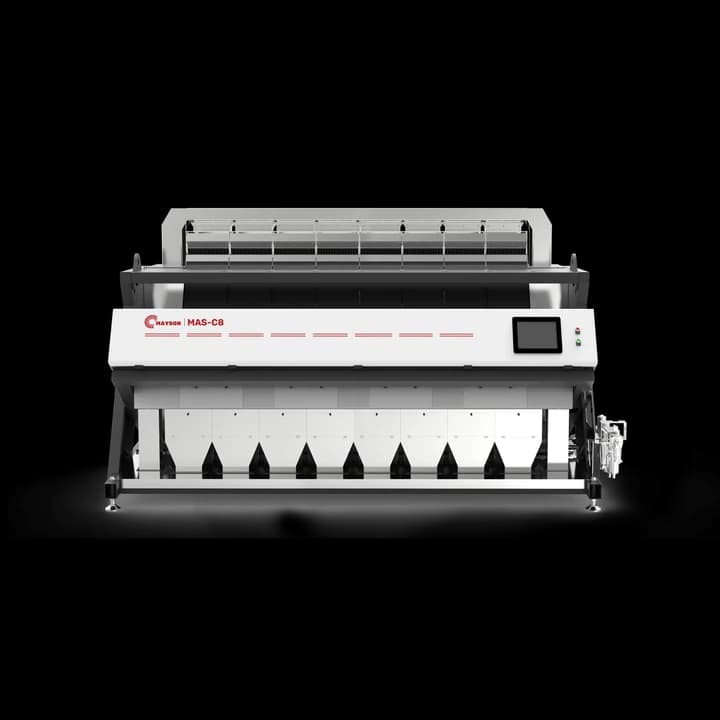
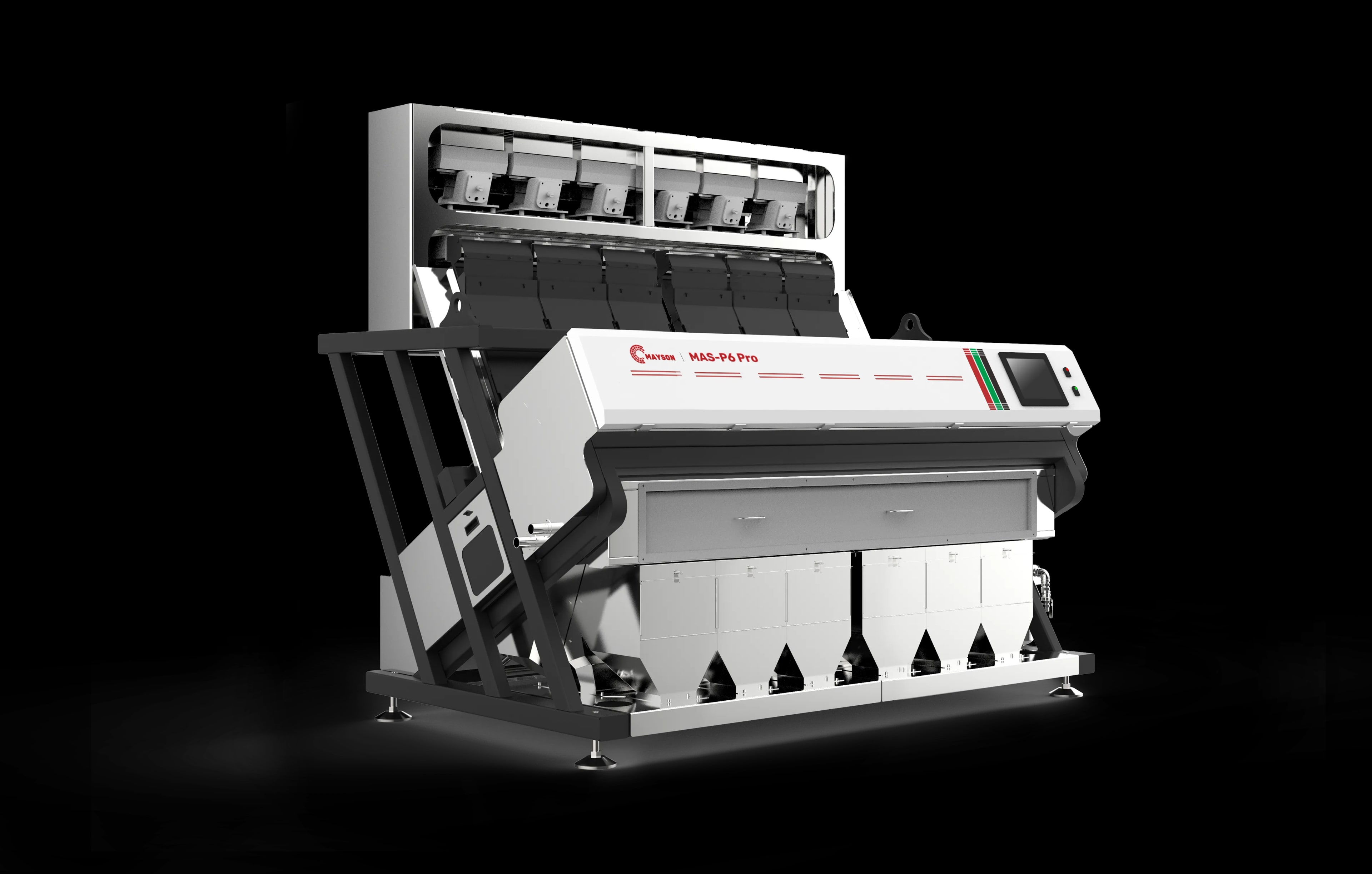
MAS-P PROCLASIFICACIÓN DE MATERIAL AVANZADA 3D
Clasificación de material
avanzada para polímeros
rígidos difíciles
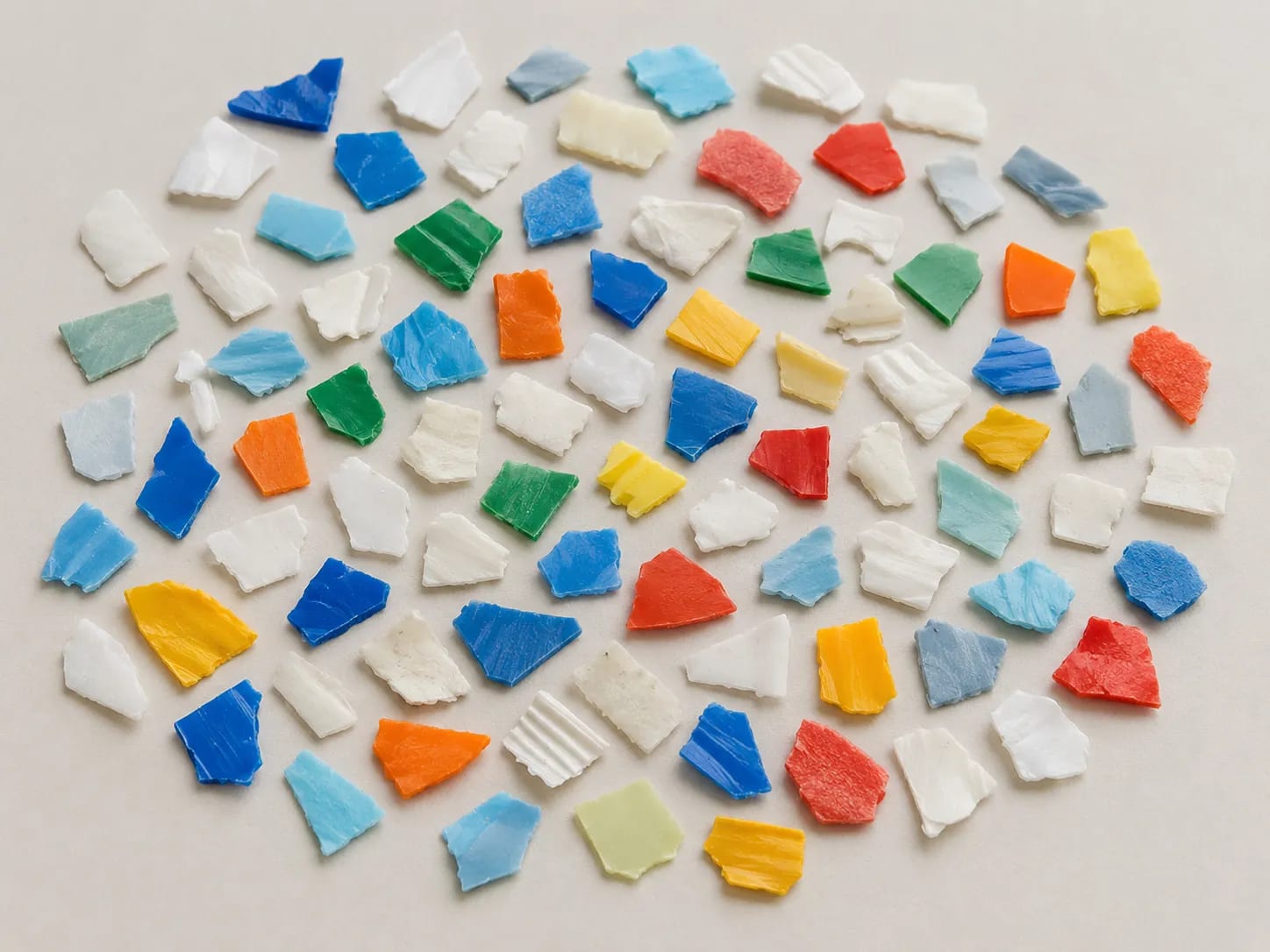
MAS-P Pro va más allá de la purificación de PET convencional. Mediante reconocimiento de material y análisis multiespectral, separa con precisión escamas rígidas visualmente similares como PP, PE, ABS, PS, PC y PMMA con una precisión excepcional y mínima pérdida.
Clasificación de material avanzadaSolo escamas rígidasMás allá del PETPP / PE / ABS / PC / PMMA

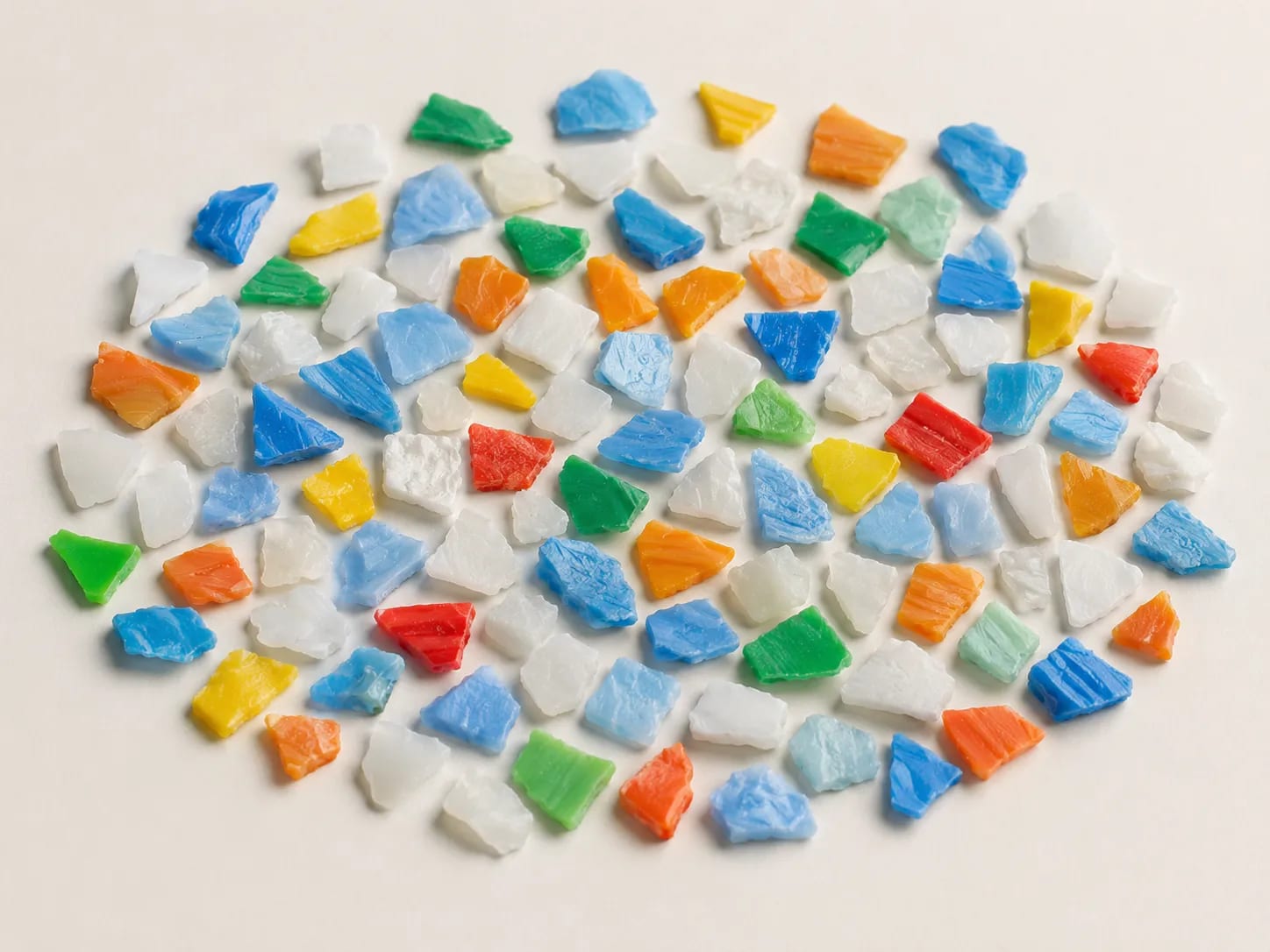
Flujo de reconocimiento de material
Identificación de material
- PP
- PE
- ABS
- PS
- PC
- PMMA
01
Alimentar
Alimentación constante de escamas rígidas con flujo y espaciado controlados.
02
Identificar
El reconocimiento de material y el análisis multiespectral identifican firmas de material con alta precisión.
03
Aceptar / Rechazar
La eyección de alta velocidad garantiza una separación limpia con mínima pérdida.
Problema / Aplicación
Use MAS-P Pro cuando la clasificación unidimensional no basta.
MAS-P Pro está construido para corrientes complejas de polímeros mixtos donde polímeros visualmente similares — PP, PE, ABS y más — deben separarse por tipo de material, no solo por color visible.
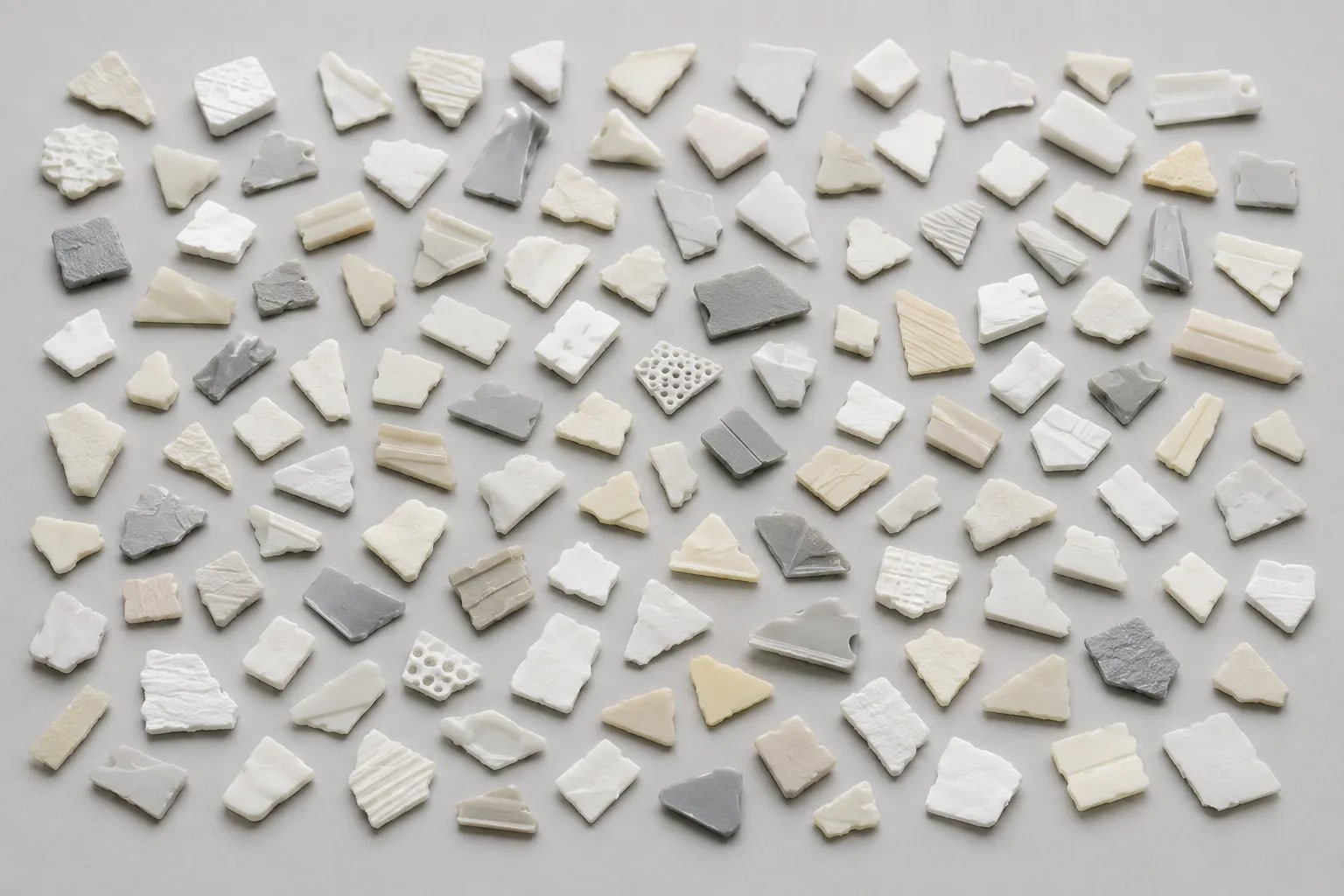
Forma de entrada adecuada
- Escamas rígidas y regranulado
- Alimentación limpia, seca y de flujo libre
- Tamaño de alimentación evaluado por muestra
Desafío típico
PP, PE, PS, ABS, PC y PMMA pueden verse similares tras la preparación, especialmente en corrientes blancas, lechosas o transparentes.
Por qué el color por sí solo no basta
Una pieza de color correcto puede seguir siendo el polímero equivocado. MAS-P Pro combina el reconocimiento de material con el análisis multiespectral.
Fuera de alcance
No está diseñado para película, pellets, polvo, líquidos ni botellas enteras.
Nota de evaluación
El rendimiento depende de la condición del material, los defectos objetivo y la prueba con muestras representativas.
Materiales más adecuados
- PP
- PE
- PS
- ABS
- PVC
- PET
- PC
- PMMA
 MAS-P PRO
Flujo de reconocimiento de material creado para polímeros rígidos difíciles.
MAS-P Pro integra el reconocimiento de material y el análisis multiespectral en un flujo unificado para separar con precisión escamas de polímero rígido visualmente similares y entregar resultados de alta pureza.
- 01
Reconocimiento de material 3D
Capture características precisas del material.
- 02
Análisis multiespectral
Capture firmas de material en múltiples longitudes de onda.
- 03
Modelo de decisión de datos
La lógica de decisión fusiona datos multi-característica para una predicción confiable.
- 04
Identificación de material
Identifique el tipo y grado de polímero.
Fusión de material + espectro
Utiliza señales espectrales para un reconocimiento robusto.
Impulsado por programas optimizados
La toma de decisiones se impulsa con algoritmos optimizados.
Probado en producción
Alta precisión en alimentaciones mixtas, coloreadas y contaminadas.
01 Alimentar
Alimentación constante de escamas rígidas con flujo y espaciado controlados.
02 Identificar
El reconocimiento de material y el análisis multiespectral identifican firmas de material con alta precisión.
03 Aceptar / Rechazar
La eyección de alta velocidad garantiza una separación limpia con mínima pérdida.
Reconocimiento espectral
Haga clic en un polímero para ver su respuesta NIR representativa.
MAS-P Pro combina reconocimiento de material con análisis multiespectral. Estos perfiles representativos ilustran cómo las escamas rígidas visualmente similares pueden presentar respuestas NIR distintas en el rango de 900–2500 nm.
Respuesta espectral
Rango de longitud de onda900 – 2,500 nmResolución~5 nmUnidades de reflectanciaUnid. arb. (u.a.)CurvaPerfil representativo
Escenarios de aplicación
Desafíos de material representativos para MAS-P Pro.
Estos escenarios se ven visualmente similares pero requieren decisiones de material más estrictas y validación con muestras representativas.
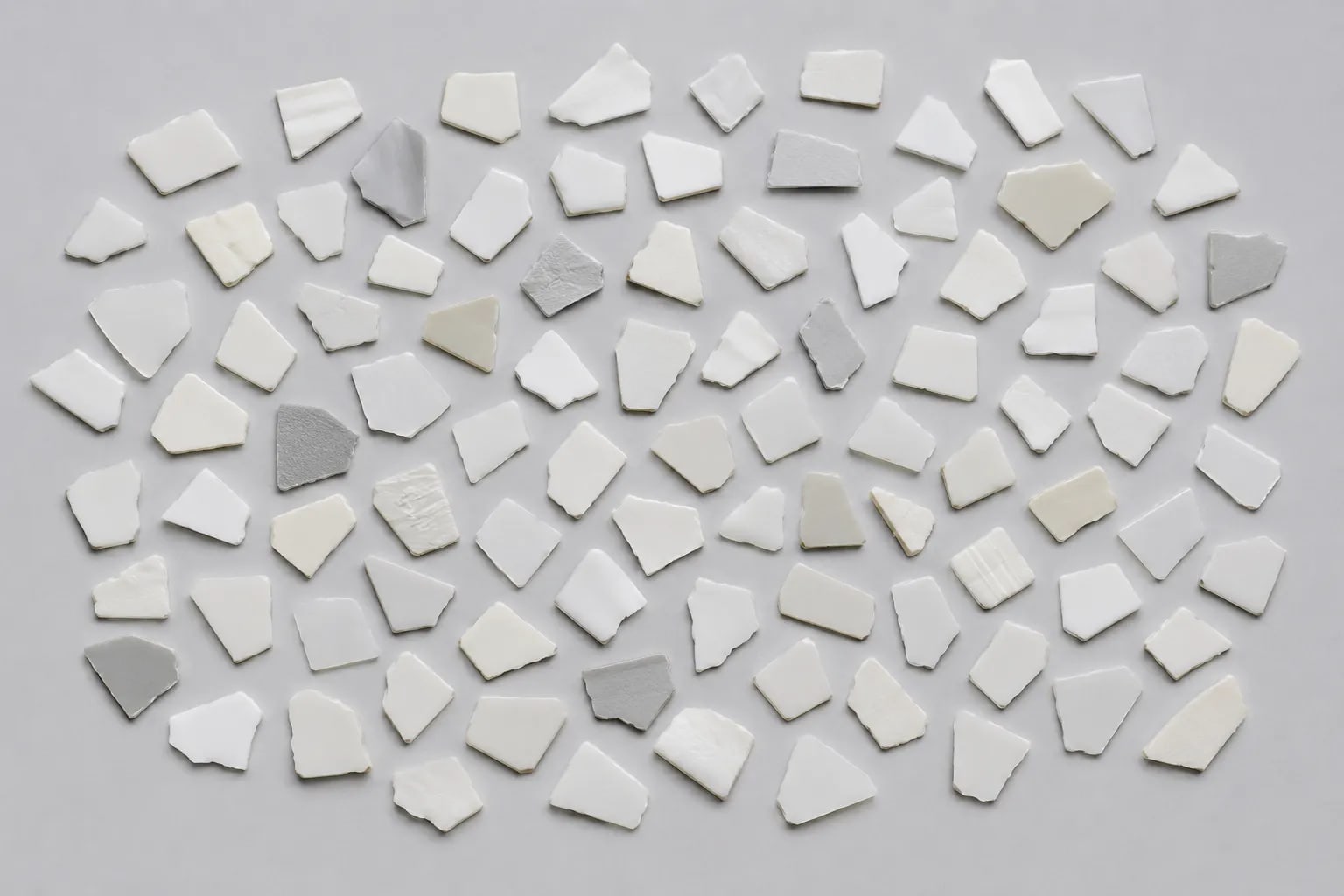
Poliolefinas mixtas (PP / PE)
Desafío: Las escamas de PP y PE pueden compartir una apariencia blanca o lechosa aunque requieran rutas de recuperación diferentes.
Objetivo de clasificación: Separar PP de PE tras la validación de receta basada en muestras.
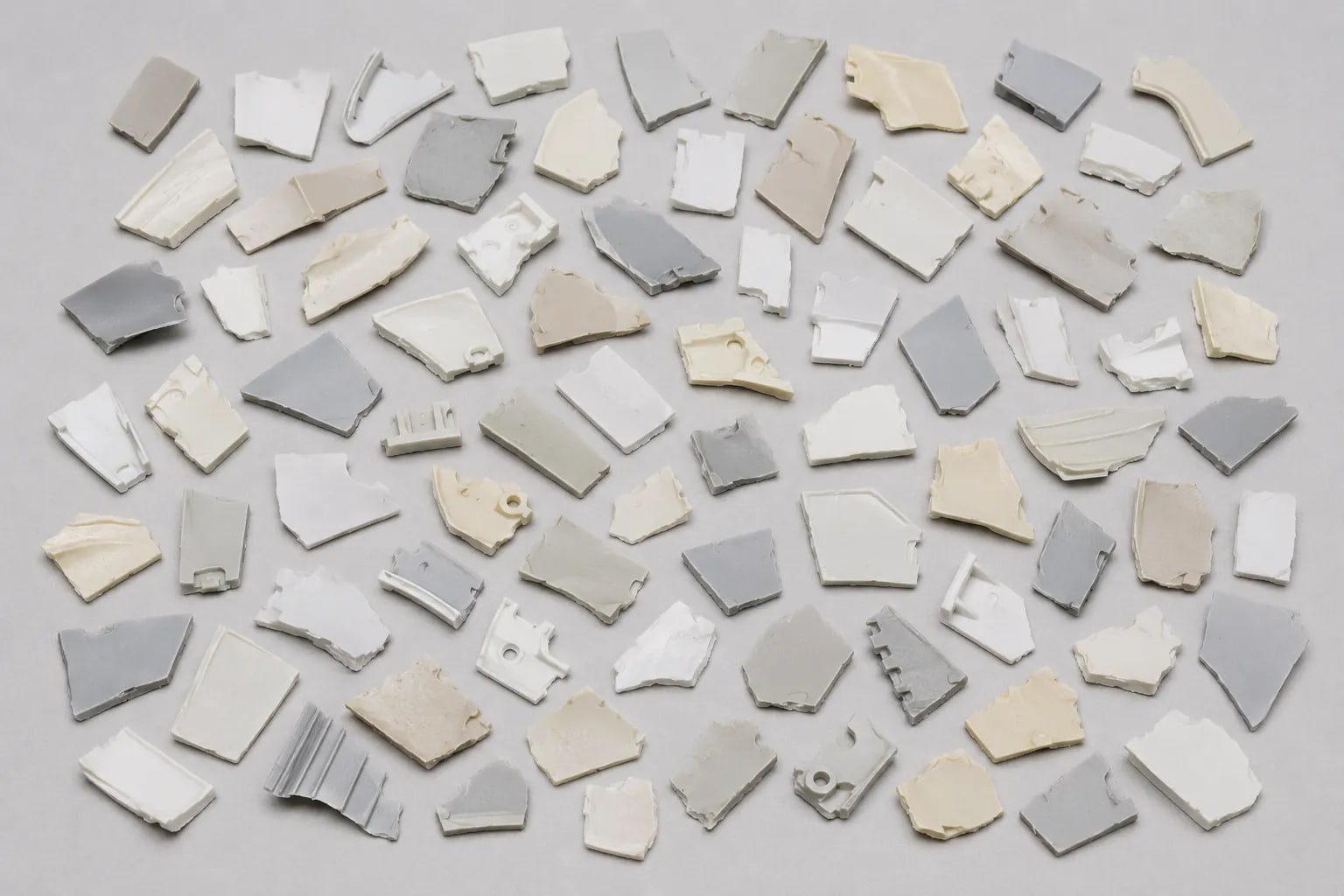
Plásticos de ingeniería neutros (ABS / PS)
Desafío: ABS y PS pueden solaparse visualmente en fragmentos rígidos de color neutro.
Objetivo de clasificación: Evaluar la clase de material y enrutar los polímeros objetivo con pérdida controlada.
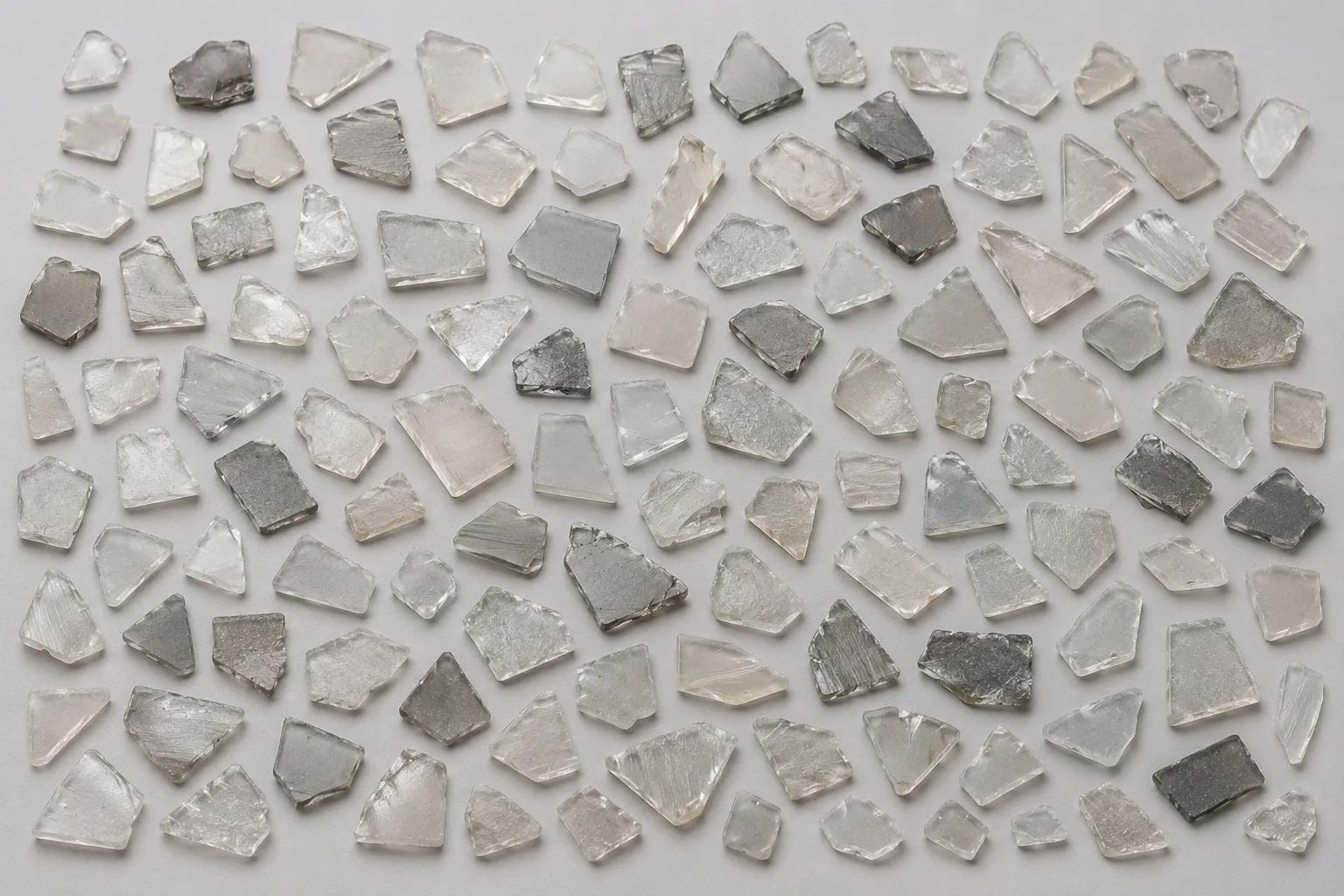
Mezcla rígida transparente (PC / PMMA)
Desafío: PC, PMMA y otros plásticos transparentes son difíciles de distinguir por apariencia.
Objetivo de clasificación: Usar referencias de respuesta de material para fragmentos rígidos transparentes y ahumados.
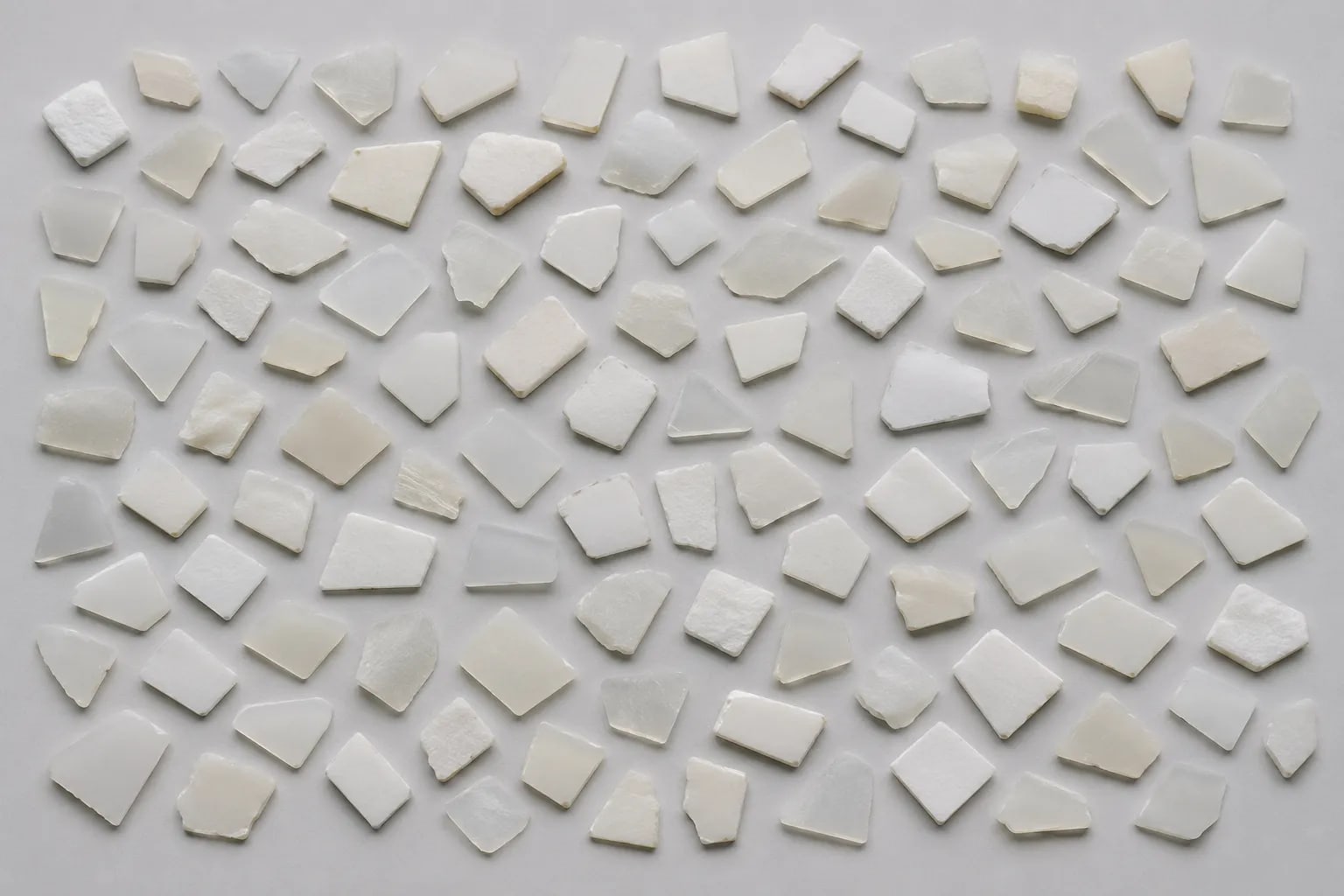
Alimentación de polímeros blancos / lechosos
Desafío: Las piezas blancas y translúcidas pueden ocultar diferencias de polímero tras el lavado y secado.
Objetivo de clasificación: Construir un conjunto de muestras filtrado en torno a materiales aceptados, rechazados y fronterizos.
Por qué importa
El reconocimiento de material mantiene estables las decisiones cuando el color por sí solo no basta.
La similitud visual es solo el comienzo. MAS-P Pro combina reconocimiento de material y análisis multiespectral para tomar decisiones consistentes donde la clasificación solo por color tiene dificultades.
Alcance de clasificación
Qué puede y qué no puede clasificar MAS-P Pro.
MAS-P Pro es una clasificadora de material avanzada para escamas de polímeros rígidos difíciles — la identidad del material es la decisión de clasificación. Si la misma corriente también necesita limpieza de color visible o rechazo de escamas negras, revise MAS-PC Pro.
MAS-P Pro puede evaluar
- PP vs PE en escamas rígidas, y corrientes ricas en PP o en PE
- ABS vs PS / HIPS en fragmentos rígidos
- PC vs PMMA en piezas rígidas transparentes o ahumadas
- PBT, POM, PA, SAN / AS y otras clases de polímero rígido confirmadas
- PET cuando la decisión de material va más allá de la purificación estándar de PET
- Corrientes de escamas rígidas multimaterial tras validar la receta con muestras
MAS-P Pro no es para
- Clasificación solo por color — use MAS-C
- Purificación simple PET vs no PET — MAS-P es suficiente
- Identificación de polímero negro solo con NIR — retire el negro con MAS-C, o use MAS-PC Pro
- Botellas enteras — use MAS-B / MAS-B Pro
- Pellets o gránulos de plástico — limitación de canales — los pellets rebotan
- Película blanda, polvo o líquidos — no es adecuado para la expulsión por aire
Plástico negro + NIR
¿Puede MAS-P Pro clasificar plástico negro por material?
No solo con reconocimiento de material NIR. El plástico negro absorbe la luz NIR, así que MAS-P Pro no es una clasificadora directa de polímero negro. Si hay escamas negras, retírelas primero con clasificación por color MAS-C, o use MAS-PC Pro, que rechaza el negro como clase de color visible antes de realizar la clasificación de material en la corriente no negra restante.
Comparar
MAS-P, MAS-P Pro y MAS-PC Pro: ¿cuál necesita?
MAS-P Pro clasifica polímeros difíciles por material; MAS-PC Pro añade clasificación por color al mismo reconocimiento de material. Empareje su tarea con la plataforma adecuada — confirmado con una muestra representativa.
| Su tarea de clasificación | Plataforma recomendada |
|---|---|
| Purificación PET vs no PET (escamas PET) | MAS-P |
| PP vs PE, ABS vs PS, PC vs PMMA (material) | MAS-P Pro |
| Separación de polímeros difíciles + limpieza de color / negro | MAS-PC Procombinación material + color |
| Solo escamas de color, negras o de color no deseado | MAS-C |
| Retirar escamas negras antes de la clasificación de material NIR | MAS-Co MAS-PC Pro |
| Botellas enteras por material antes de triturar | MAS-B Pro |
MAS-P Pro vs MAS-PC Pro: elija MAS-P Pro cuando la decisión principal es la identidad de material del polímero. Elija MAS-PC Pro cuando la misma corriente de polímeros difíciles también necesita clasificación por color visible, rechazo de escamas negras o control de grado de color — combina el reconocimiento de material MAS-P Pro con la clasificación por color en una plataforma.
Anatomía de la máquina
Una dirección de clasificación de material compleja para escamas preparadas.
La pila de sensores exacta, el diseño óptico y la configuración del modelo requieren confirmación de ingeniería de Mayson.
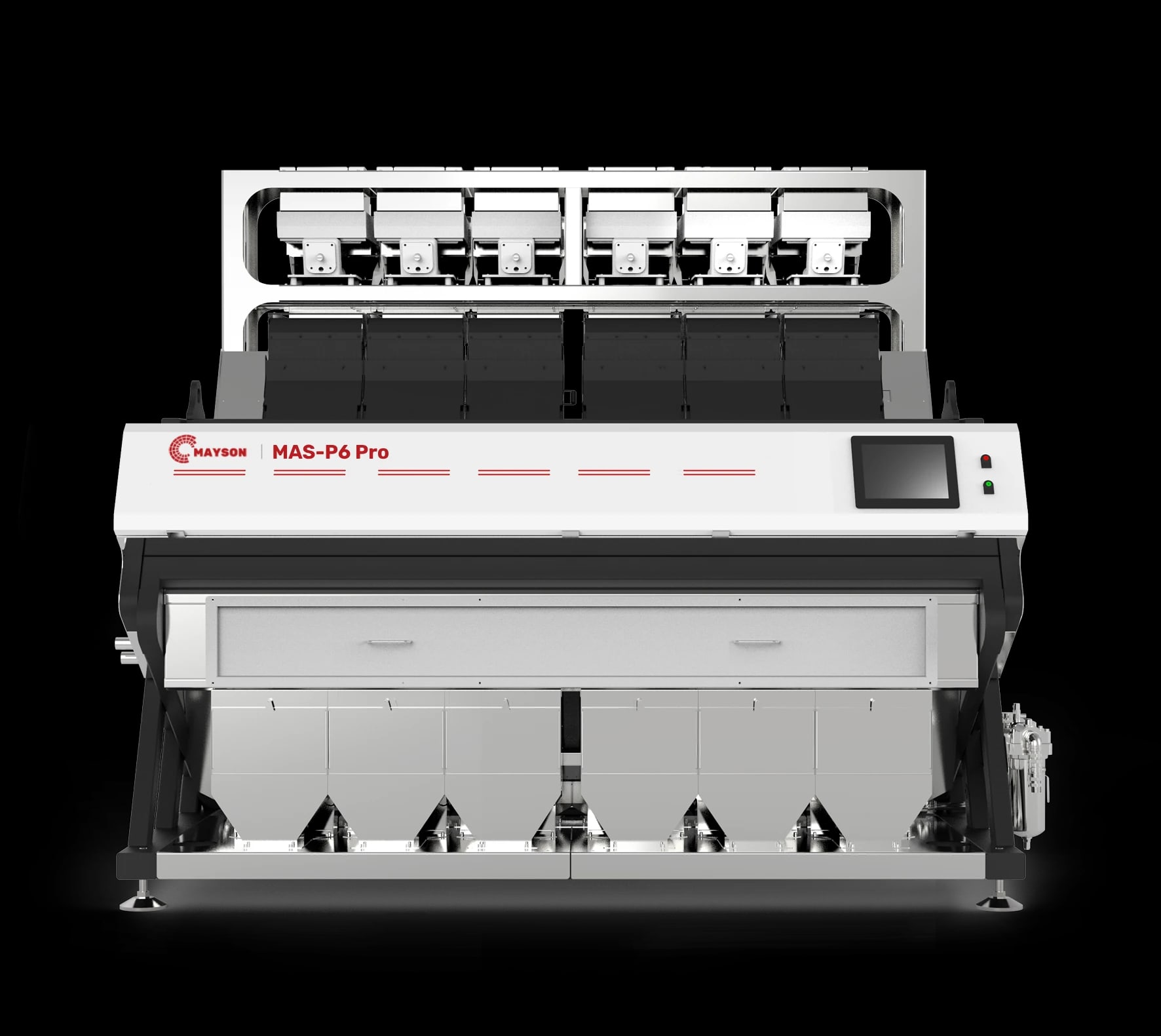
Presentación de material
Se necesita una capa consistente de escamas preparadas antes de que cualquier decisión avanzada pueda ser útil.
Reconocimiento multifunción
La página pública describe la dirección de reconocimiento multiespectral sin nombrar principios de sensor no confirmados.
Control de rechazo
Las rutas de rechazo deben planificarse alrededor de la clase de material objetivo y la revisión de salida.
Detalles técnicos
Especificaciones de la clasificadora de polímeros MAS-P Pro (3D).
La serie MAS-P Pro mantiene la misma estructura de canales mientras añade el reconocimiento de material avanzado para corrientes difíciles de polímeros rígidos.
| Módulo (canales) | Longitud (mm) | Ancho (mm) | Altura (mm) | Peso (kg) | Potencia (kW) | Capacidad (T/H) | Aire (m³/min) |
|---|---|---|---|---|---|---|---|
| P3 | 2150 | 1928 | 2385 | 1150 | 3.5 | 0.8-1.5 | <2 |
| P4 | 2150 | 1928 | 2585 | 1250 | 3.5 | 1.5-2 | <2 |
| P5 | 2825 | 1928 | 2385 | 1750 | 5.5 | 2-4 | <3 |
| P6 | 2825 | 1928 | 2385 | 2150 | 5.5 | 2.5-4 | <3 |
| P7 | 3518 | 1928 | 2385 | 2250 | 6.5 | 3-5 | <4 |
| P8 | 3518 | 1928 | 2385 | 2350 | 6.5 | 3-6 | <4 |
** Las cifras pueden variar según las tasas de contaminantes.
Preguntas de compradores
Preguntas a responder antes de finalizar la configuración.
Estas preguntas mantienen la descripción de capacidades ligada a la validación con muestras.
¿Qué puede separar MAS 3D?
MAS 3D separa polímeros rígidos mezclados por tipo — PP, PE, ABS, PS, PC, PMMA y más — usando reconocimiento NIR multiespectral. Maneja las separaciones más difíciles entre parecidos, como PP vs PE, que una clasificadora de PET estándar no puede. Es una clasificadora de material; cuando una línea también necesita clasificación por color, MAS 3D se combina con MAS-C, o integra ambas como MAS-PC Pro.
¿Es MAS 3D lo mismo que MAS-P Pro?
Sí. MAS 3D es el nombre de producto de la clasificadora de polímeros multiespectral MAS-P Pro — la versión mejorada de reconocimiento de material de MAS-P, disponible en configuraciones de uso general y de un solo polímero.
¿Puede MAS 3D clasificar PP, PE, ABS, PC y PMMA?
Sí — para eso está diseñada. Su reconocimiento NIR multiespectral separa mezclas de polímeros más difíciles como PP vs PE y PP/PE/ABS que una clasificadora de PET estándar no puede. El resultado exacto depende del material, los aditivos y la contaminación, y se confirma con una prueba de muestra.
¿En qué se diferencia MAS 3D de MAS-P?
MAS-P realiza la purificación de PET (PET vs no-PET). MAS 3D va más allá, separando polímeros no-PET entre sí — PP vs PE, mezclas PP/PE/ABS — con reconocimiento multiespectral. Ambas clasifican por material; añadir color es la combinación con MAS-C o la configuración MAS-PC Pro.
¿Puede MAS 3D manejar plástico negro?
El NIR no puede identificar el plástico negro, que absorbe la señal. Un paso de clasificación por color retira primero el negro; luego MAS 3D separa las escamas de color restantes por tipo de polímero.
¿Es MAS-P Pro (MAS 3D) una clasificadora de color?
No. MAS-P Pro es principalmente una clasificadora de material para polímeros rígidos difíciles. Si el proyecto también necesita clasificación por color, rechazo de escamas negras o limpieza de grado de color, revise MAS-PC Pro, que añade clasificación por color al mismo reconocimiento de material.
¿Cuándo elegir MAS-PC Pro en lugar de MAS-P Pro?
Elija MAS-PC Pro cuando la misma corriente de polímeros difíciles necesita tanto separación de material como clasificación por color visible — por ejemplo separación PP/PE o ABS/PS más eliminación de piezas de color no deseado, amarilleadas o negras. MAS-PC Pro combina el reconocimiento de material MAS-P Pro con clasificación por color de alta velocidad en una plataforma.
¿Puede MAS-P Pro separar ABS y PS?
Sí. Los fragmentos rígidos de ABS y PS pueden evaluarse como clases de material objetivo, lo cual es útil porque suelen solaparse visualmente. El rendimiento final depende del estado del material, aditivos, color y prueba de muestra representativa.
¿Es MAS-P Pro para pellets o película de plástico?
No. MAS-P Pro es una plataforma de canales para escamas o fragmentos rígidos. Los pellets rebotan en el canal y la película blanda es demasiado ligera para una expulsión por aire estable, incluso triturada — un límite físico de manejo, no solo de reconocimiento.
¿Es MAS-P Pro para botellas enteras?
No. Las botellas enteras se clasifican con MAS-B o MAS-B Pro antes de triturar. MAS-P Pro trabaja con escamas o fragmentos rígidos preparados tras la reducción de tamaño.
Revisión de muestra
Previsualice la dirección de su muestra de polímeros mixtos
Empiece con fotos y notas de material para discutir las corrientes objetivo y de rechazo antes de una prueba formal.
Previsualice su muestra de materialPrueba en máquina real
Solicite una prueba real de clasificación de polímeros mixtos
Confirme la configuración final con muestras representativas de escamas rígidas.
Solicitar una prueba de material real