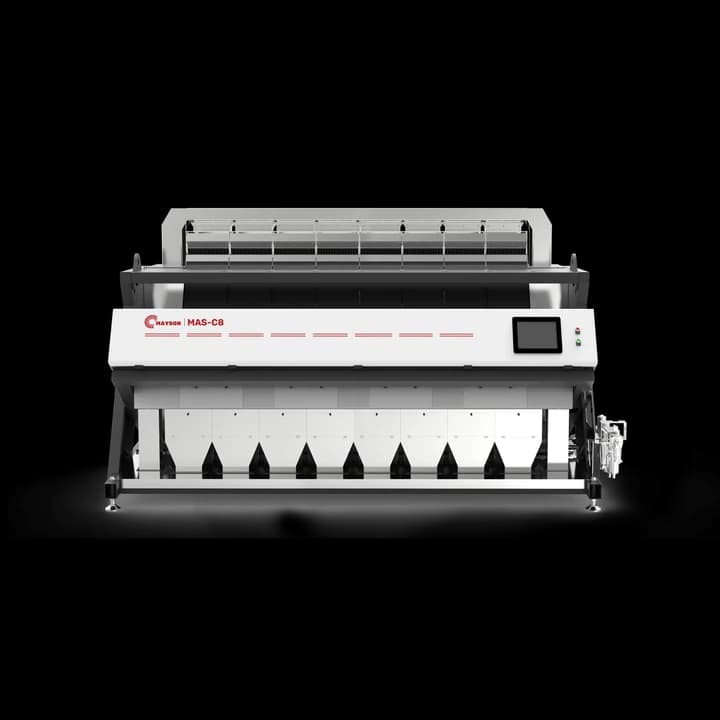
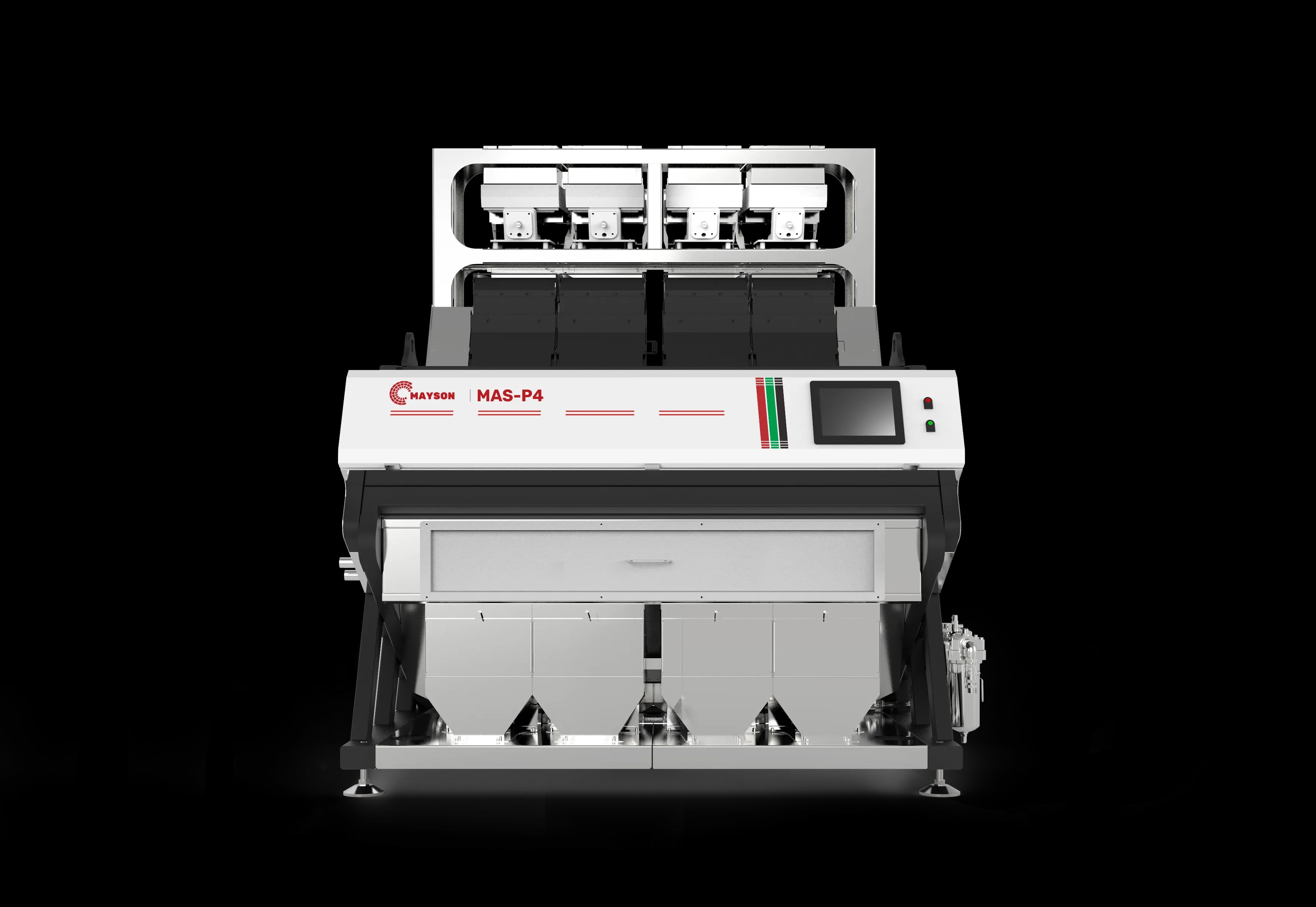
MAS-PSERIE DE CLASIFICACIÓN DE MATERIAL PET
PET de alta pureza
Clasificación de material
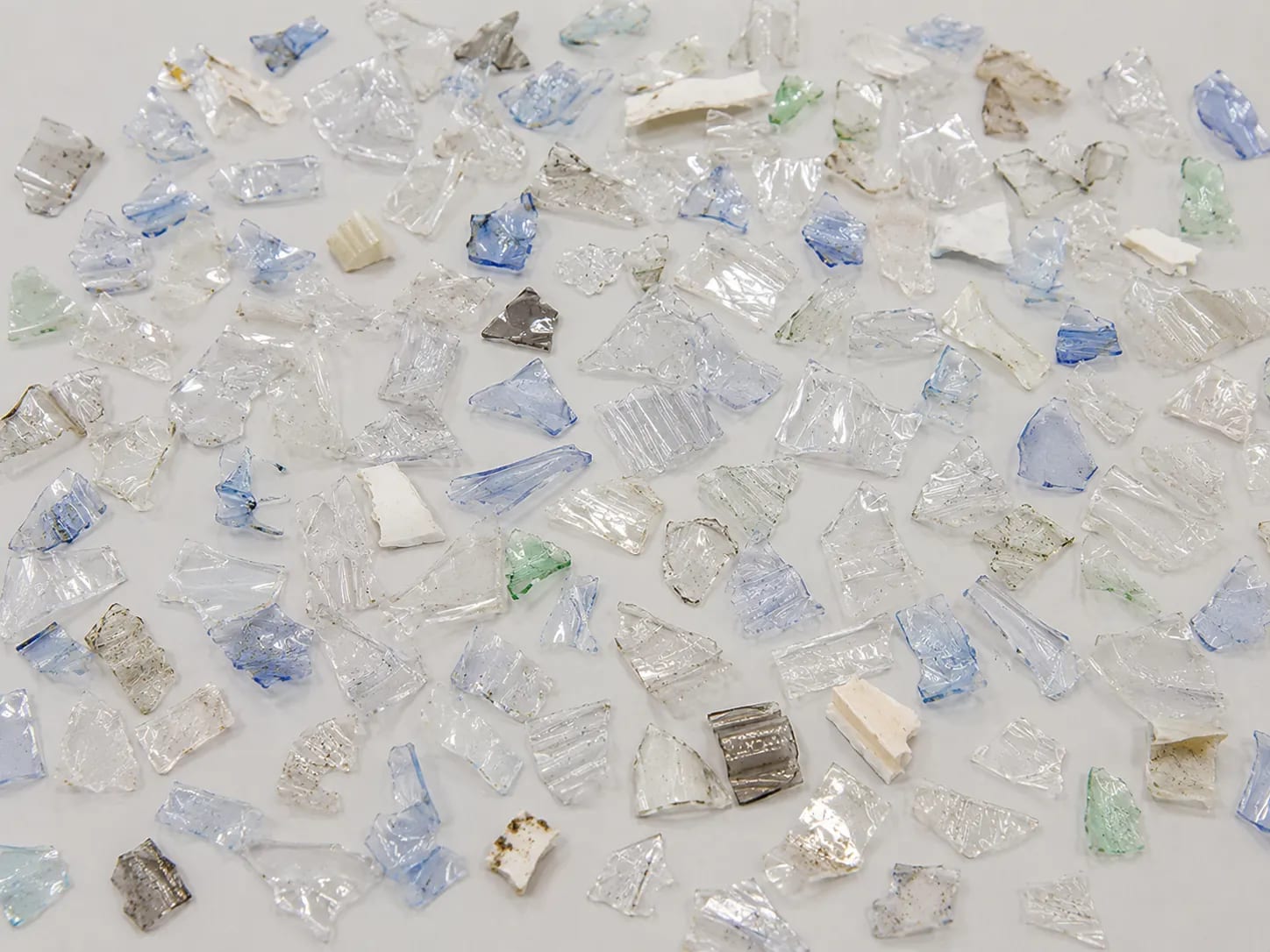
Antes de la clasificación por color
MAS-P elimina PVC, PP, PE y otros contaminantes no PET de las corrientes de escamas PET, entregando PET ultrapuro para mayor calidad del producto, rendimiento estable aguas abajo y máxima recuperación de valor.
Clasificación de material PETEliminación de PVC / PP / PEPET de alta purezaAntes de la clasificación por color
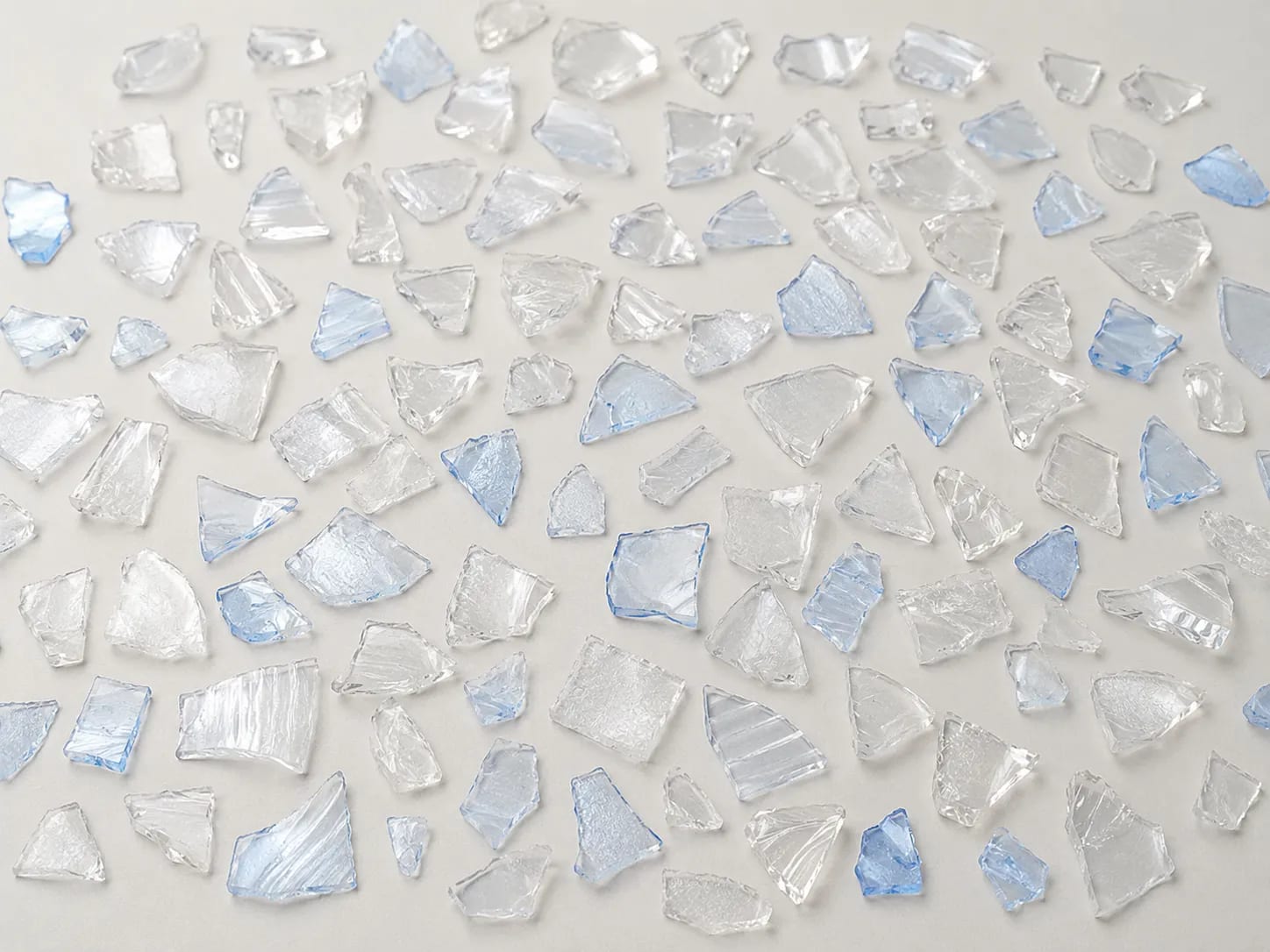
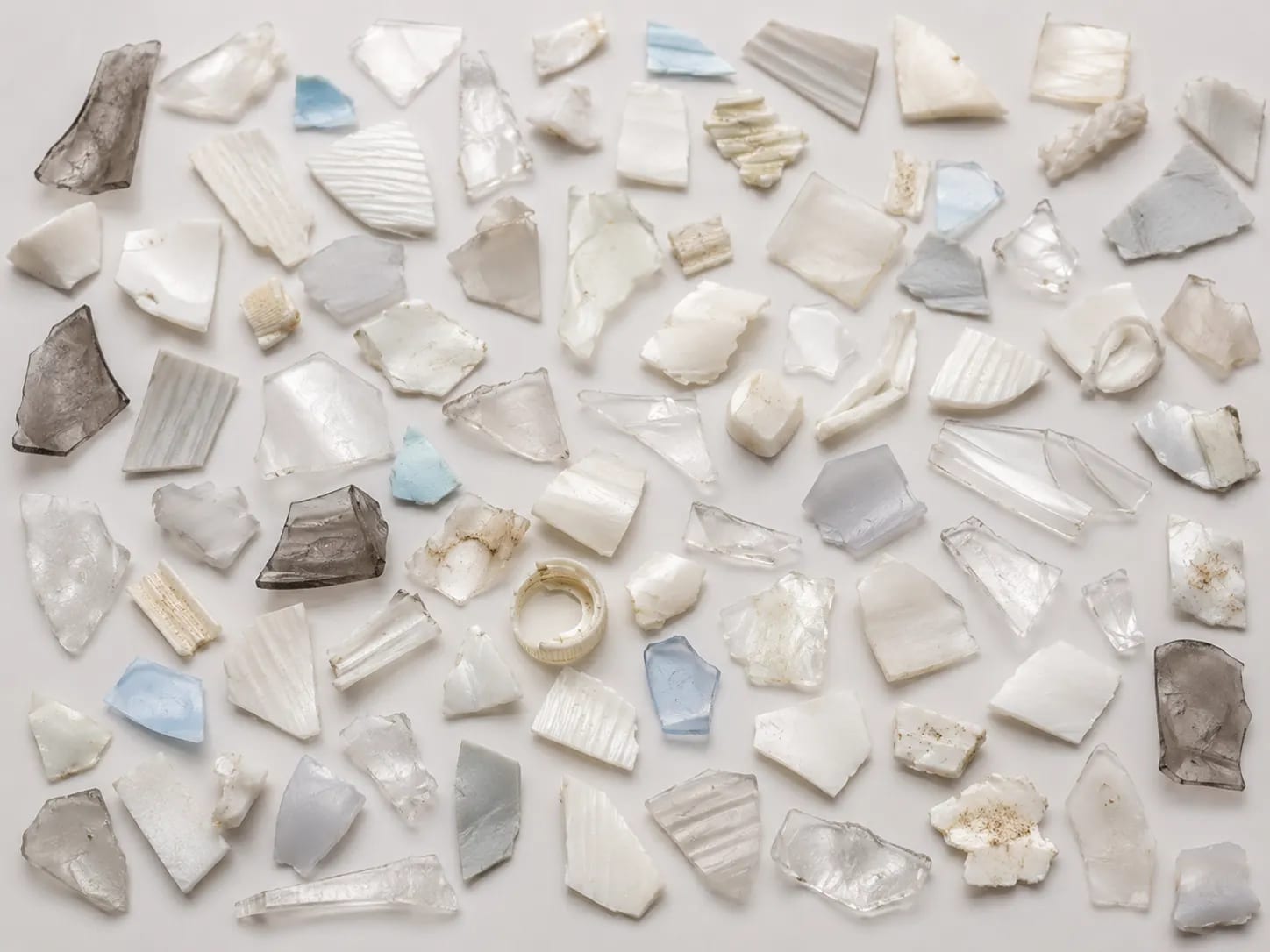
01
Alimentar
Corriente de escamas PET mixtas con posibles contaminantes no PET.
02
Identificar
El NIR de alta resolución lee la respuesta del material y separa el PET de las piezas no PET confirmadas.
03
Aceptar / Rechazar
Los contaminantes se rechazan y el PET puro continúa a la clasificación por color.
Por qué MAS-P
Pureza que la clasificación por color visible no puede alcanzar por sí sola.
MAS-P es la plataforma de clasificación de material PET para escamas preparadas, donde una escama de color correcto puede seguir siendo el polímero equivocado.
Identidad de material, no solo color
Apunta a si una escama pertenece a la corriente PET, detectando piezas que parecen correctas pero son el polímero equivocado.
Mayor pureza de PET
Elimina las piezas no PET seleccionadas para que la corriente PET aceptada cumpla una especificación de resina más estricta.
Color y material separados
Mantiene la limpieza de color visible y la identidad de material como decisiones distintas y escalonadas en lugar de un paso difuso.
Clases de rechazo basadas en muestras
Las clases de rechazo se construyen a partir de sus ejemplos reales de PET y no PET, no de una lista de materiales universal genérica.
Objetivos de contaminantes nombrados
PVC, tapas PE/PP, similares transparentes y plásticos de ingeniería se definen como objetivos concretos y comprobables.
Lista para la línea
Revisada según su lavado y secado aguas arriba y sus necesidades de control de calidad aguas abajo.
Aplicaciones principales
Dos trabajos de purificación de PET, una plataforma.
MAS-P se posiciona por el objetivo de material — qué debe salir de la corriente PET — no por una categoría de plástico vaga.
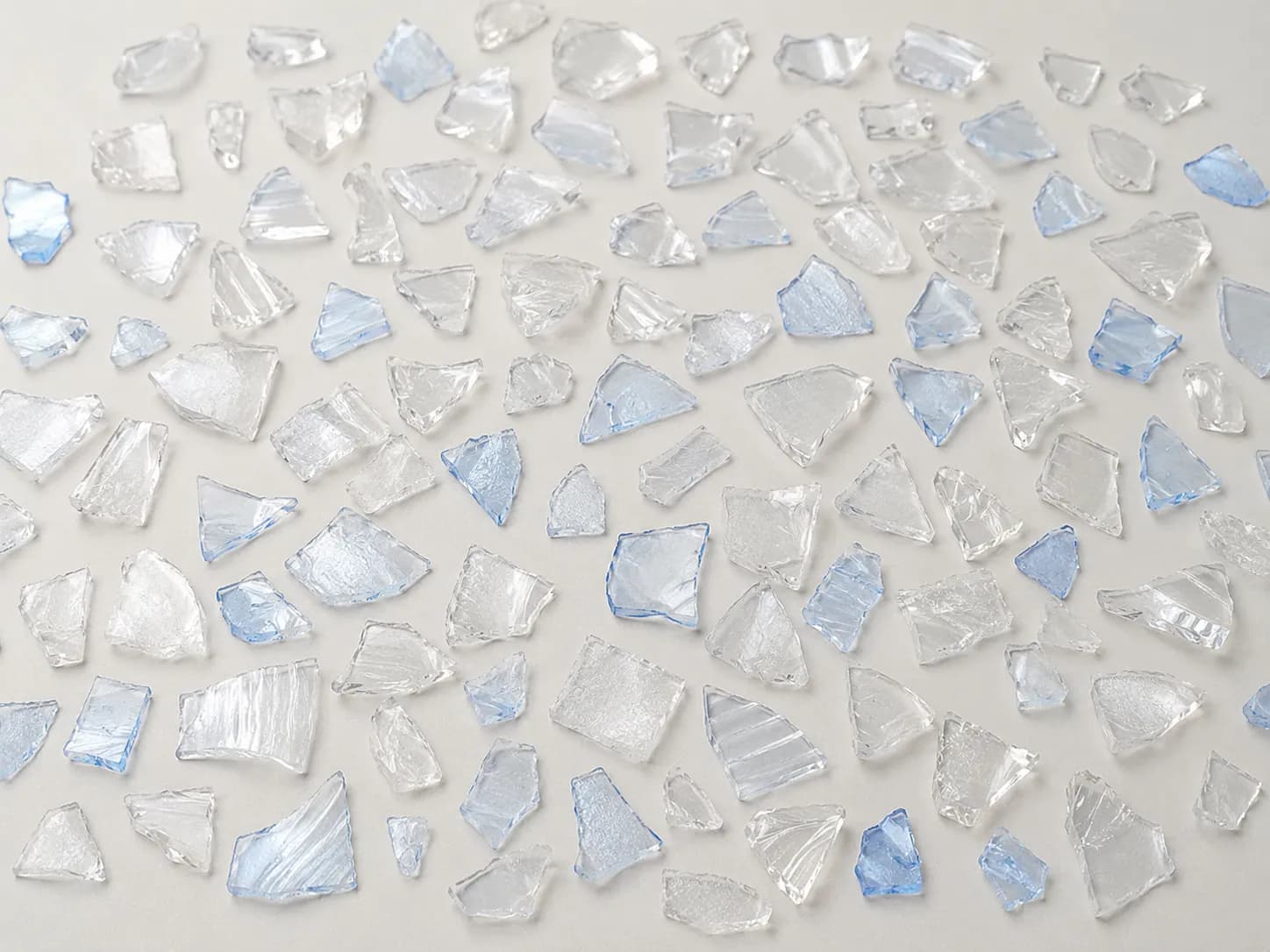
Aplicación 01
Purificación de PET después del lavado
Tome escamas PET lavadas y secas y elimine las piezas no PET seleccionadas — PVC, lámina de PVC, tapas y cierres de PE y PP — para que la corriente aceptada cumpla su especificación de resina.
PVC / lámina de PVCTapas PE / PPNo PET mixtoPET aceptado
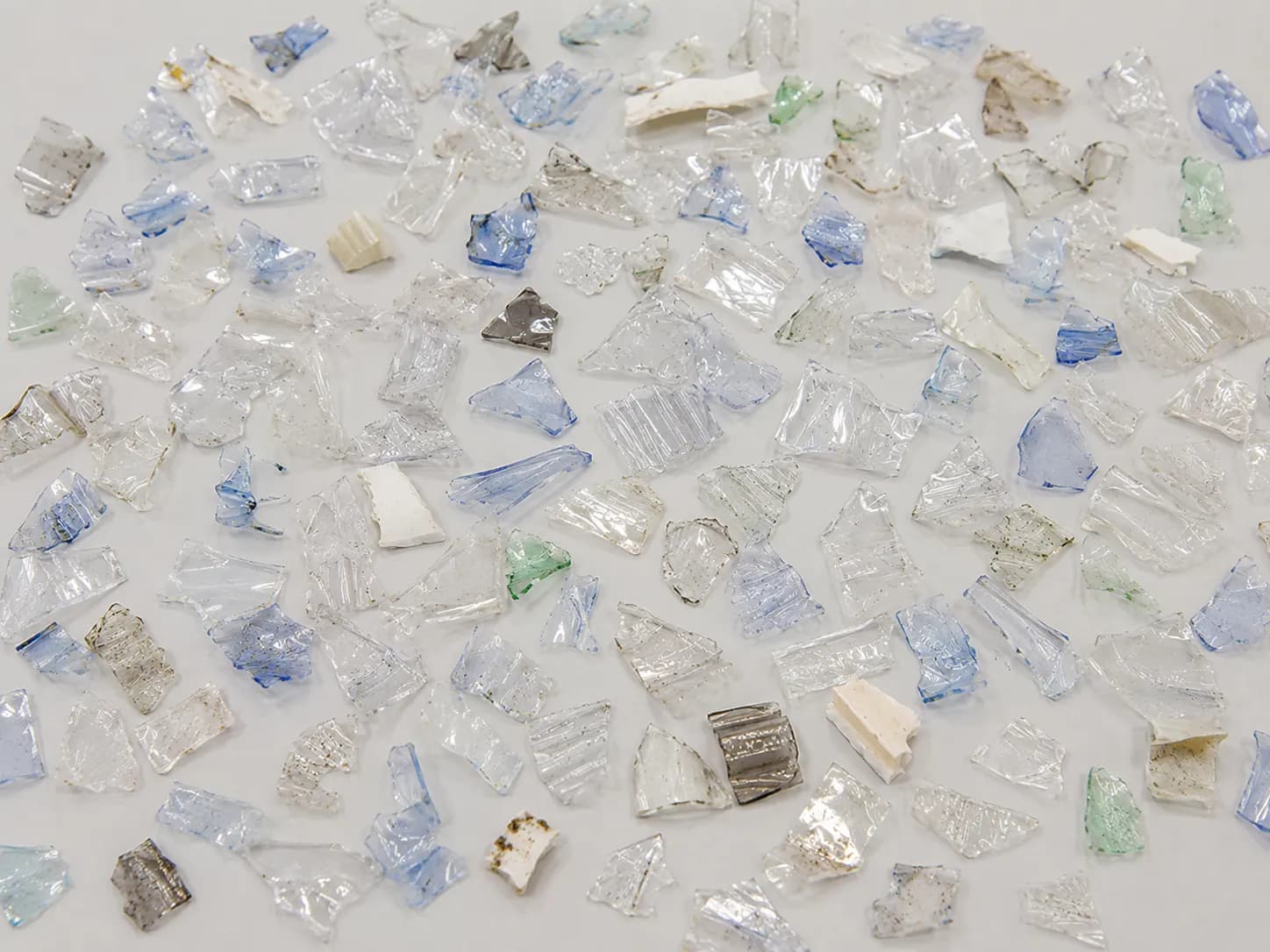
Aplicación 02
Eliminación de contaminantes similares
Detecte los casos difíciles — no PET transparente y plásticos de ingeniería que pasan una verificación de color pero son el material equivocado — de la alimentación de PET azul-blanco y comercial.
No PET transparentePlásticos de ingenieríaPET azul-blancoPiezas fronterizas
Alcance de clasificación
Qué puede y qué no puede clasificar MAS-P.
MAS-P purifica una corriente de escamas PET — separa el PET aceptado de las clases de rechazo no PET confirmadas. No clasifica los polímeros rechazados en corrientes de producto individuales.
MAS-P elimina de las escamas PET
- PVC y lámina de PVC — el parecido prioritario a eliminar del PET
- Tapas y cierres de PE y PP
- Piezas de PS, PMMA / acrílico y PC parecidas al PET
- SAN / AS, PA, POM y otras clases de rechazo no PET confirmadas
- No PET transparente que pasa la clasificación por color visible
- Contaminantes no plásticos seleccionados cuando se confirman con pruebas
MAS-P no es para
- PP vs PE como corrientes de producto separadas — use MAS 3D (MAS-P Pro)
- Purificar ABS / PS / PMMA como materiales aceptados — use MAS 3D (MAS-P Pro)
- Botellas enteras antes de triturar — use MAS-B
- Pellets de plástico — limitación de canales — los pellets rebotan
- Película de plástico blanda — la expulsión por aire no es adecuada
- Plástico negro solo con NIR — retire el negro con MAS-C, o use MAS-PC
PET + PVC
¿Puede MAS-P eliminar el PVC de las escamas PET?
Sí. MAS-P está diseñada para la purificación de escamas PET, donde el PVC transparente puede parecer casi idéntico al PET y pasar la clasificación por color visible. MAS-P usa la respuesta de material NIR para separar el rango de PET aceptado de las clases de rechazo ricas en PVC y otras no PET confirmadas. Incluso una pequeña fracción de PVC degrada el PET reprocesado, por lo que es el objetivo de eliminación prioritario.
Corriente de purificación PET
Entrada PET, escamas PET aceptadas y rechazos no PET.
El MAS-P se centra en la clasificación de material de escamas PET donde la clasificación por color visible por sí sola no es suficiente para definir la calidad objetivo.

La separación de material debe confirmarse con muestras representativas. No asuma detección universal de polímeros a partir de redacción genérica.
Materias primas
El PET y las clases no PET que MAS-P elimina.
Cambie entre etapas de purificación y haga clic en cualquier clase para ver exactamente qué entra y qué sale — la alimentación, el PET aceptado y cada clase de rechazo nombrada.
PET frente a las piezas no PET comunes en una corriente de escamas lavadas.
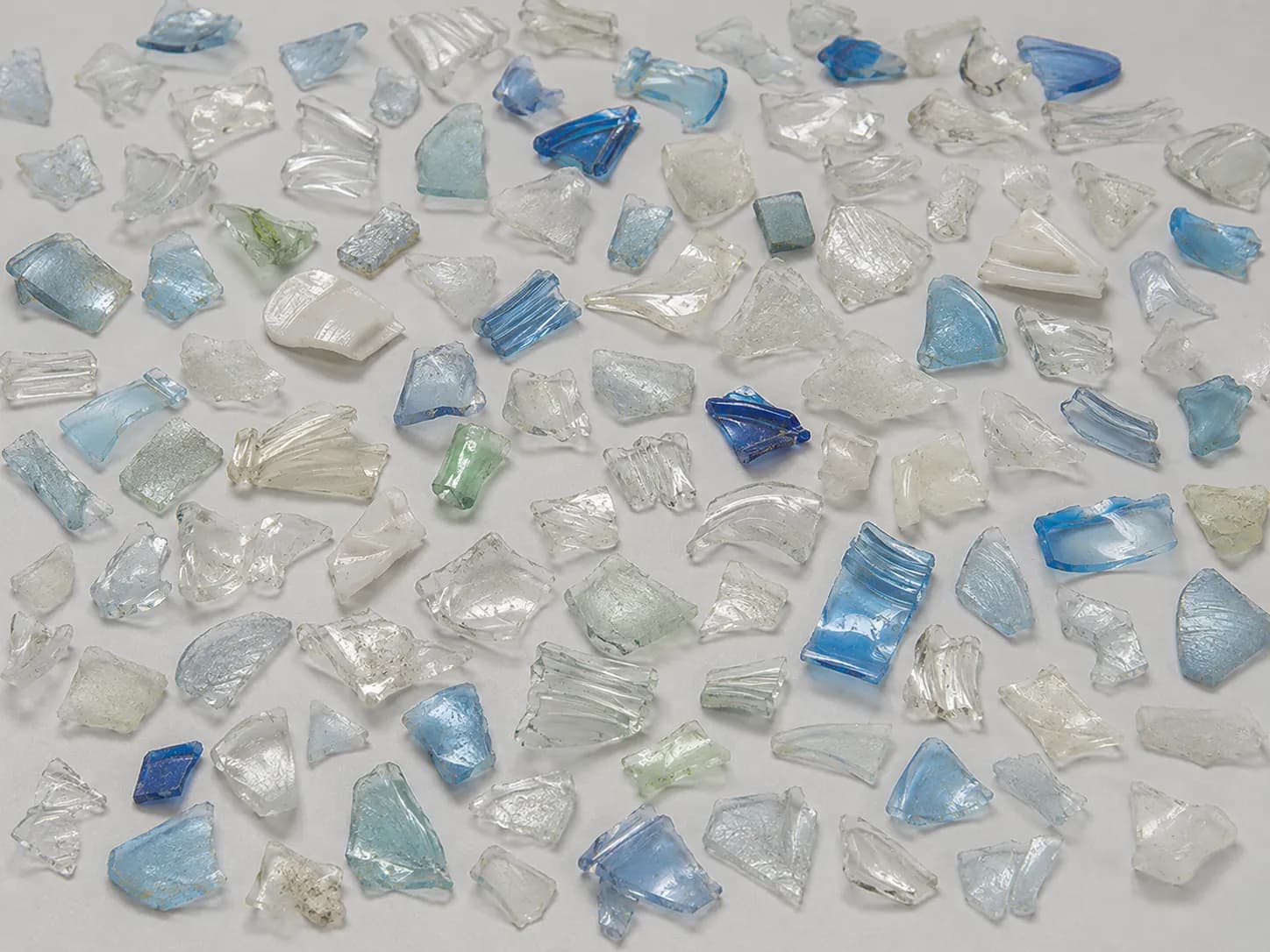
Alimentación mixta
Escamas PET lavadas que llegan con las piezas no PET cotidianas — tapas, cierres y polímeros sueltos — mezcladas.
Accepted and reject classes are always confirmed on your representative samples before a configuration is quoted.
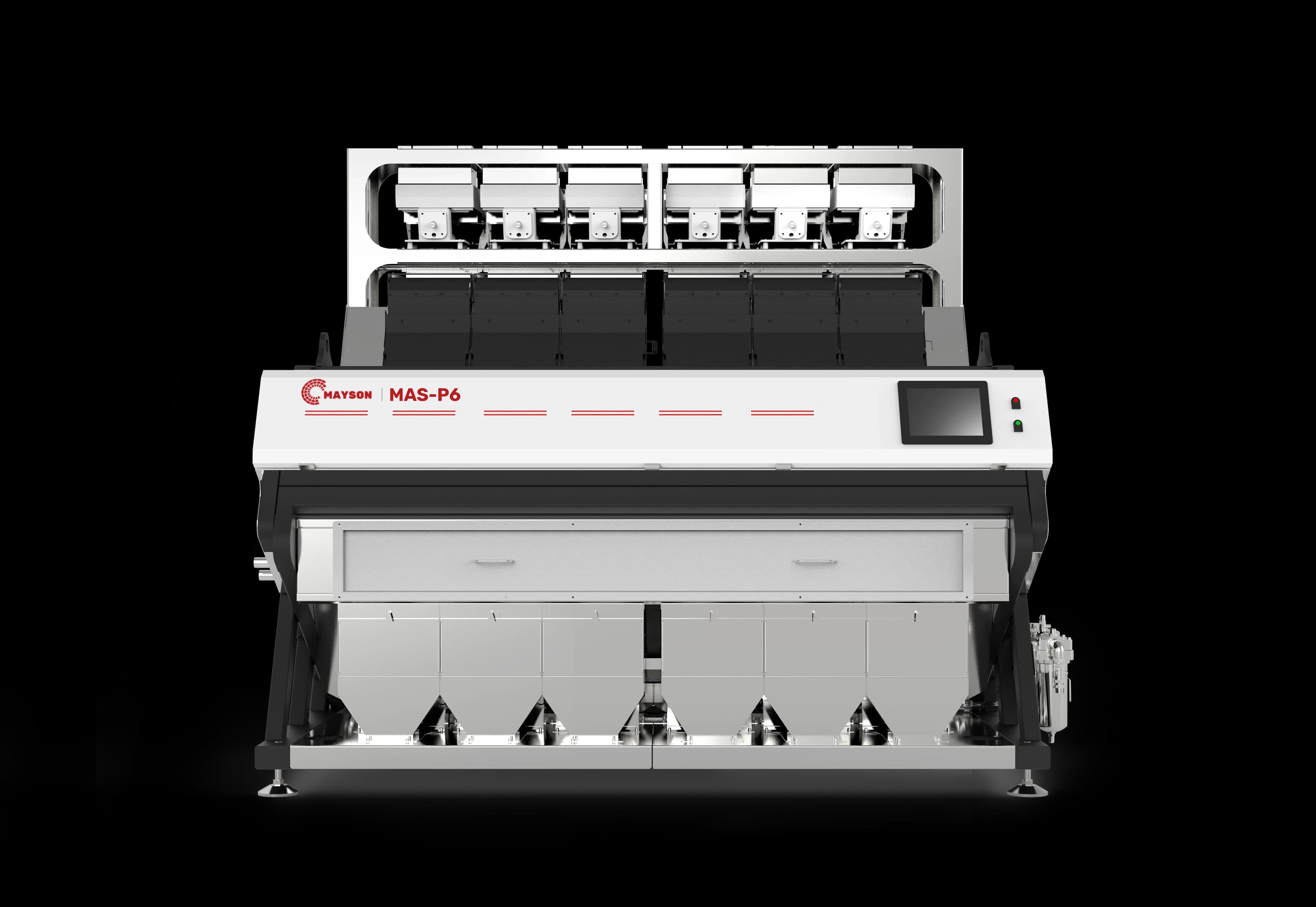
La plataforma
Una plataforma de clasificación de material PET, basada en muestras por diseño.
La presentación estable de escamas, la inspección sensible al material y la eyección sincronizada con precisión se ajustan a las clases de PET aceptado y no PET que usted confirma en las pruebas.
Enfocado en PETIdentidad de material, no color
Tras el lavadoDespués de la preparación de escamas
Basado en muestrasClases de rechazo de su corriente
ModularAnchos de canal según el rendimiento
Cómo funciona
La clasificación de material comienza después de la preparación de escamas.
El conjunto útil de pruebas incluye PET aceptado, rechazos objetivo, variación de color, residuo de etiqueta, suciedad y tamaño típico de partícula.
- 01Preparado por el cliente
Alimentar escamas preparadas
Las escamas PET lavadas y secas se dosifican en el alimentador después de su línea de preparación. La humedad, los residuos de etiqueta y el tamaño de la escama afectan la limpieza con que se presenta cada pieza.
- 02Presentación estable
Extender y singularizar
Las escamas se extienden en una capa fina y uniforme para que cada pieza se inspeccione por separado en lugar de como un grumo — la base de una decisión de material consistente.
- 03Inspección de material
Leer la respuesta del material
Cada escama se inspecciona por respuesta de material, no solo por color visible. Esto es lo que separa una escama de PET de una pieza similar de PVC, PE o no PET transparente.
- 04PET frente a no PET
Decidir según el mapa de muestras
Cada escama se compara con su rango de PET aceptado y las clases de rechazo no PET nombradas confirmadas en la prueba de muestra — PVC, tapas PE/PP, transparentes y plásticos de ingeniería.
- 05Eyección por aire
Eyectar y verificar
Las piezas fuera de PET se soplan al canal de rechazo mientras el PET aceptado cae. Ambas corrientes se verifican contra su objetivo de pureza, con una segunda pasada disponible para especificaciones más estrictas.
Comparar
MAS-P vs MAS-C vs MAS-PC: ¿cuál necesita?
MAS-P purifica el PET por material; MAS-C clasifica por color; MAS-PC hace ambas en una plataforma. Empareje su objetivo de escamas PET con la ruta adecuada — confirmado con una muestra representativa.
| Su objetivo de escamas PET | Plataforma recomendada |
|---|---|
| Eliminar PVC y otros no PET de las escamas PET | MAS-P |
| Eliminar solo escamas PET de color no deseado (color) | MAS-C |
| Eliminar no PET y color no deseado en una máquina | MAS-PCcombinación material + color |
| Retirar escamas negras antes de la clasificación de material NIR | MAS-Co MAS-PC |
| Separar corrientes de material PP / PE / ABS | MAS 3DMAS-P Pro / MAS-PC Pro |
| Clasificar botellas enteras antes de triturar | MAS-B |
¿Cuándo elegir MAS-PC en lugar de MAS-P? Elija MAS-P cuando una corriente de escamas PET necesita principalmente purificación de material (PET vs no PET confirmado). Elija MAS-PC cuando la misma corriente también necesita limpieza de color visible — retirar escamas azules, verdes, ámbar, amarilleadas, negras o de color no deseado — ya que MAS-PC combina la clasificación de material NIR estilo MAS-P con la clasificación por color estilo MAS-C en una plataforma.
Detalles técnicos
Especificaciones de la clasificadora de polímeros MAS-P.
Las configuraciones de canales de P3 a P8 cubren líneas de purificación de PET desde rutas de recuperación compactas hasta plantas de escamas de mayor rendimiento.
| Módulo (canales) | Longitud (mm) | Ancho (mm) | Altura (mm) | Peso (kg) | Potencia (kW) | Capacidad (T/H) | Aire (m³/min) |
|---|---|---|---|---|---|---|---|
| P3 | 2150 | 1928 | 2385 | 1150 | 3.5 | 0.8-1.5 | <2 |
| P4 | 2150 | 1928 | 2585 | 1250 | 3.5 | 1.5-2 | <2 |
| P5 | 2825 | 1928 | 2385 | 1750 | 5.5 | 2-4 | <3 |
| P6 | 2825 | 1928 | 2385 | 2150 | 5.5 | 2.5-4 | <3 |
| P7 | 3518 | 1928 | 2385 | 2250 | 6.5 | 3-5 | <4 |
| P8 | 3518 | 1928 | 2385 | 2350 | 6.5 | 3-6 | <4 |
** Las cifras pueden variar según las tasas de contaminantes.
Preguntas de compradores
Lo que preguntan los compradores antes de especificar una MAS-P.
Respuestas directas sobre pureza, qué cuenta como no PET, dónde se sitúa MAS-P en la línea y cómo una prueba de muestra se convierte en una configuración.
¿Qué elimina MAS-P de las escamas de PET?
MAS-P identifica el PET y expulsa las escamas no-PET — PVC, PE, PP, PS, PMMA, PC y similares — mediante reconocimiento de material NIR. El PVC es el objetivo prioritario porque se parece casi idéntico al PET pero arruina el reciclado de PET incluso en cantidades mínimas.
¿Por qué importa tanto el PVC en el PET?
El PVC y el PET pueden ser visualmente indistinguibles, así que una clasificadora de color no puede detectarlo, y sin embargo una pequeña fracción de PVC degrada y decolora el PET reprocesado. El NIR de MAS-P lee la firma del polímero para eliminar el PVC que el ojo y una cámara de color no ven.
¿Es MAS-P solo una clasificadora por color?
No — todo lo contrario. MAS-P es una clasificadora de material (NIR) para escamas preparadas. Su función principal es la purificación de PET: identificar el PET y expulsar el no-PET como PVC, PE, PP, PS, PMMA y PC.
¿Puede MAS-P separar PP de PE, o purificar un polímero no-PET?
No. MAS-P trabaja sobre un límite PET vs no-PET. Para separar polímeros no-PET entre sí (PP vs PE, mezclas PP/PE/ABS) o purificar un solo polímero no-PET, use MAS 3D (MAS-P Pro) con reconocimiento multiespectral.
¿MAS-P reemplaza a MAS-C?
No — hacen trabajos distintos. MAS-C clasifica por color visible; MAS-P clasifica por tipo de polímero. Muchas líneas de PET usan ambas: MAS-C para color y para retirar el negro, MAS-P para la pureza de material.
¿Es MAS-P para botellas enteras?
No. MAS-P trabaja con escamas trituradas. Clasifique las botellas enteras con MAS-B antes de reducirlas de tamaño.
¿Puede MAS-P eliminar el PVC de las escamas PET?
Sí — es el trabajo prioritario. El PVC transparente puede parecer casi idéntico al PET y pasar la clasificación por color, así que MAS-P usa la respuesta de material NIR para separar el PET aceptado de las clases de rechazo ricas en PVC y otras no PET. Incluso un poco de PVC degrada el PET reprocesado.
¿Cuándo elegir MAS-PC en lugar de MAS-P?
Elija MAS-PC cuando su corriente de escamas PET necesita tanto purificación de material como limpieza de color visible — eliminar no PET más escamas de color no deseado, amarilleadas o negras. MAS-PC combina la clasificación de material NIR estilo MAS-P con la clasificación por color estilo MAS-C en una plataforma.
¿MAS-PC reemplaza a MAS-P y MAS-C?
En algunas líneas de escamas PET, sí — MAS-PC hace clasificación de material y color en una máquina. Para solo material, elija MAS-P; para solo color, elija MAS-C. Para separación de PP / PE / ABS, suba a MAS-PC Pro.
¿Puede MAS-P clasificar pellets o película de plástico?
No. MAS-P es una clasificadora de canales para escamas y fragmentos rígidos. Los pellets rebotan en los canales y la película es demasiado ligera para la expulsión por aire, incluso triturada.
¿Puede MAS-P garantizar una pureza fija?
No. La pureza depende de su material — tipo y carga de contaminantes, tamaño de escama y preparación. Una prueba de muestra representativa define las clases de rechazo no PET y confirma la pureza de PET realista para su corriente.
Vista previa en línea
Previsualice su corriente de escamas PET antes de una prueba de máquina.
Use la vista previa visual para discutir las corrientes de PET aceptado y de rechazo no PET probables antes de enviar escamas reales.
Vista previa de material en líneaPruebas con muestras reales
Use your own PET flake stream before finalizing the sorting direction.
A MAS-P project should start from real PET flakes plus the non-PET classes that must be removed from the accepted stream.
Solicitar una prueba MAS-P